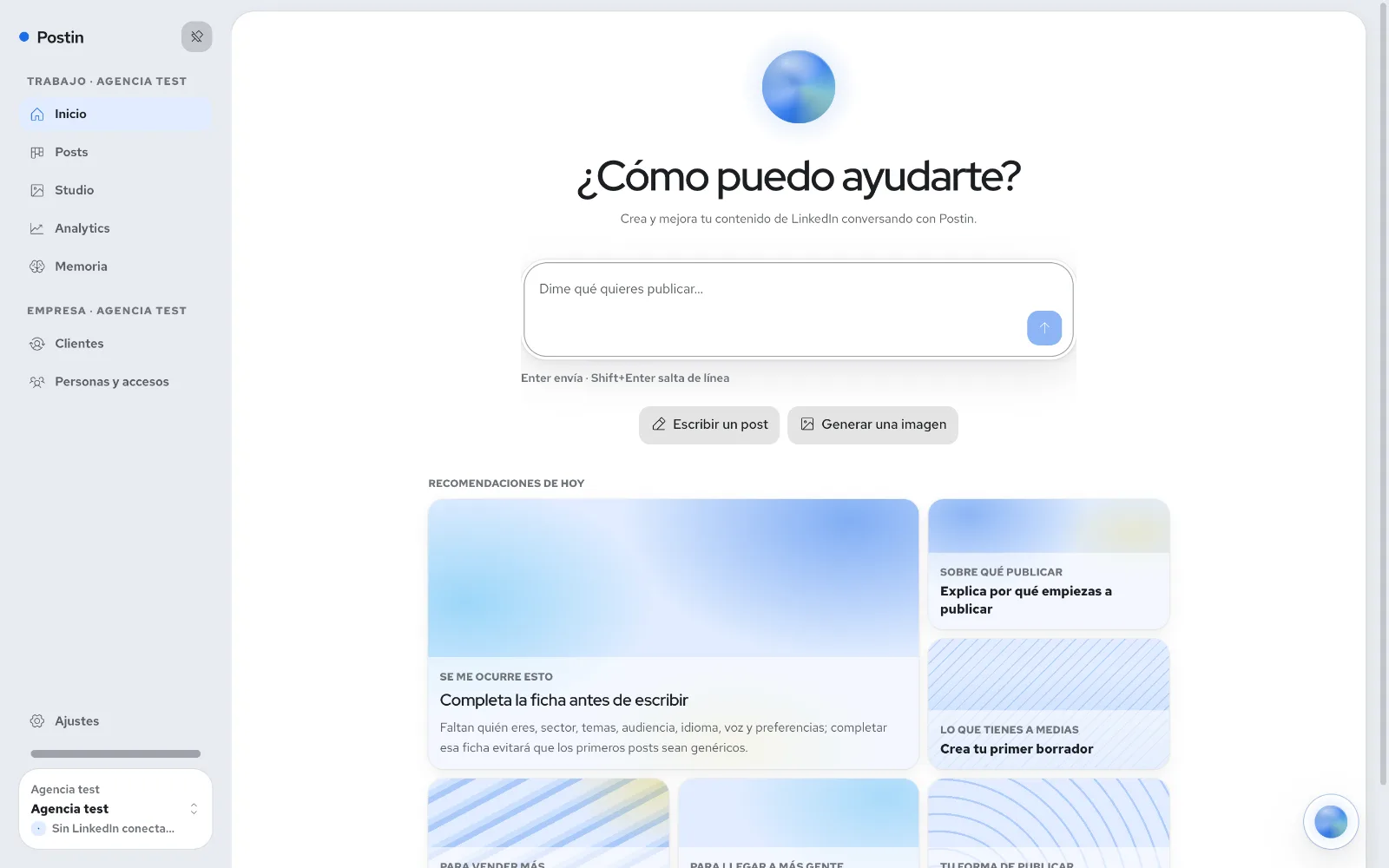
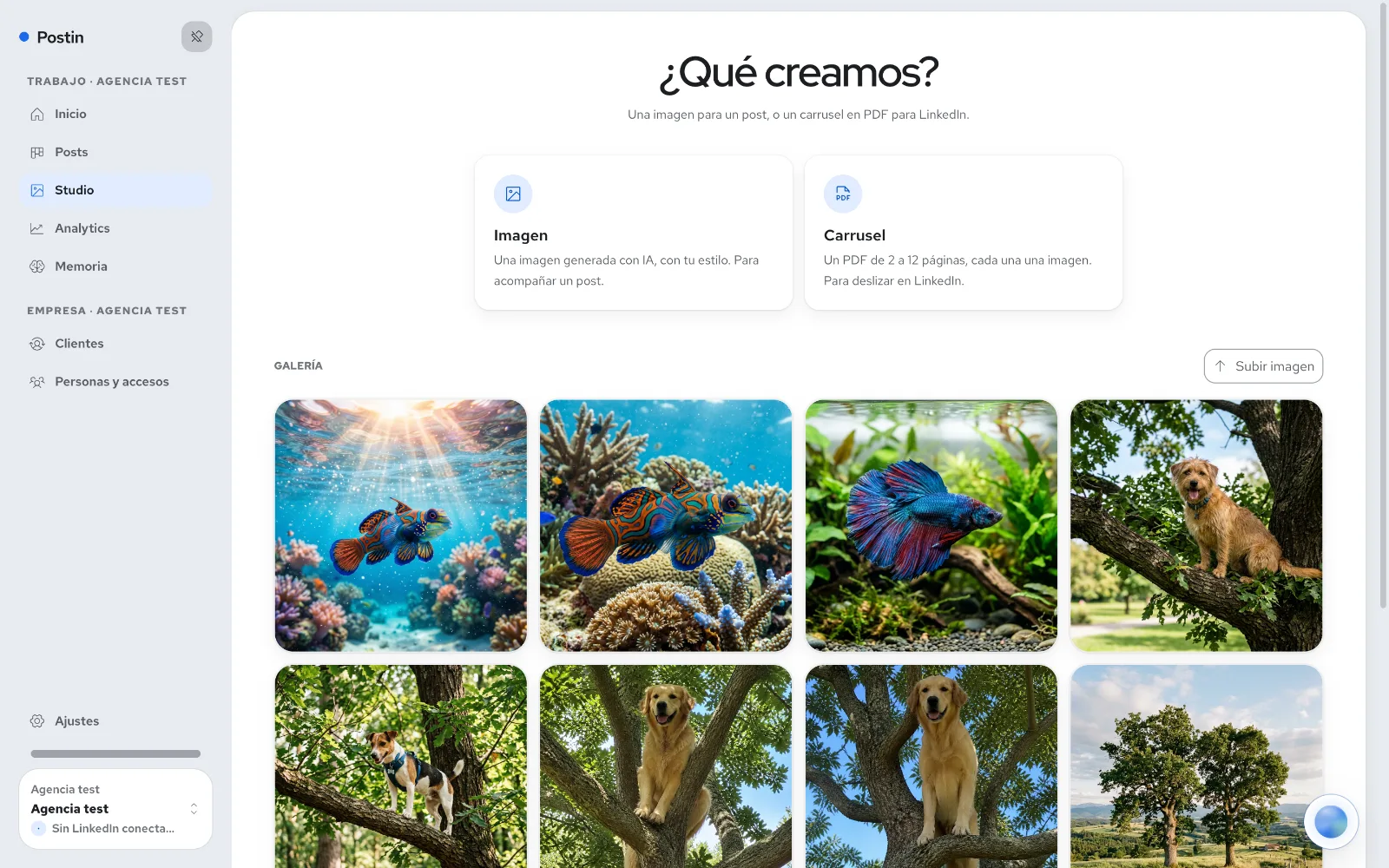
Your company already has a voice: your people's.
Few people read the company page. Your people are read by their contacts, their clients and the candidates you want to hire. Postin leaves them a draft ready to review and approve.
Starting with a single person. Each with their own voice and their own approval.
What happens today
Either they don't post, or they post your press release.
Both outcomes are bad: in one, nobody sees what your people know; in the other, anyone can tell from a mile away that marketing wrote the post.
- 01
The executive with no time
You ask for one post a month and they say yes. Five months later they still haven't sent you anything, and it's not bad faith: the time just never turns up.
- 02
The post someone else wrote
You hand it over already written, they publish it without changing a comma, and their network reads a press release with their name on it.
- 03
Everyone saying the same thing
When the content comes from a single hand, sales, product and leadership post the same sentence with a different photo.
- 04
Nobody knows who approved what
A post goes out with a figure that shouldn't have gone out, and the next conversation is about whose fault it was.
How Postin solves it
One voice per person. One standard for all of them.
Marketing prepares and supports; each person keeps their own way of talking and approves their own posts. Nobody posts on anyone else's behalf.
One voice per person
It comes from their own writing or from five minutes of talking. Your CTO doesn't sound like your sales director.
Marketing lays the groundwork
Topics, drafts and the calendar are prepared in one place, with roles for each person.
Whoever's name is on it approves it
They read it, change whatever they want and add the final period. Their part takes minutes, not an afternoon.
No post goes out under someone's name unless that person approves that exact version. Inside your company too.
On one screen
You know what everyone's working on.
Who has drafts waiting, who posted this week and who hasn't created their voice yet. No need to ask for a summary by email.
What it's really for
Three things you're paying for some other way today.
Sales
A salesperson whose market reads them walks into meetings halfway there. Posting is slow prospecting, but it's prospecting.
Talent
Whoever is about to send you their résumé looks at your people first, not at the careers page. If your teams post, it shows how they work.
Reputation
When something happens, the company that has spent a year explaining itself has something to stand on. The one that only puts out press releases doesn't.
We won't promise you numbers we can't back up.
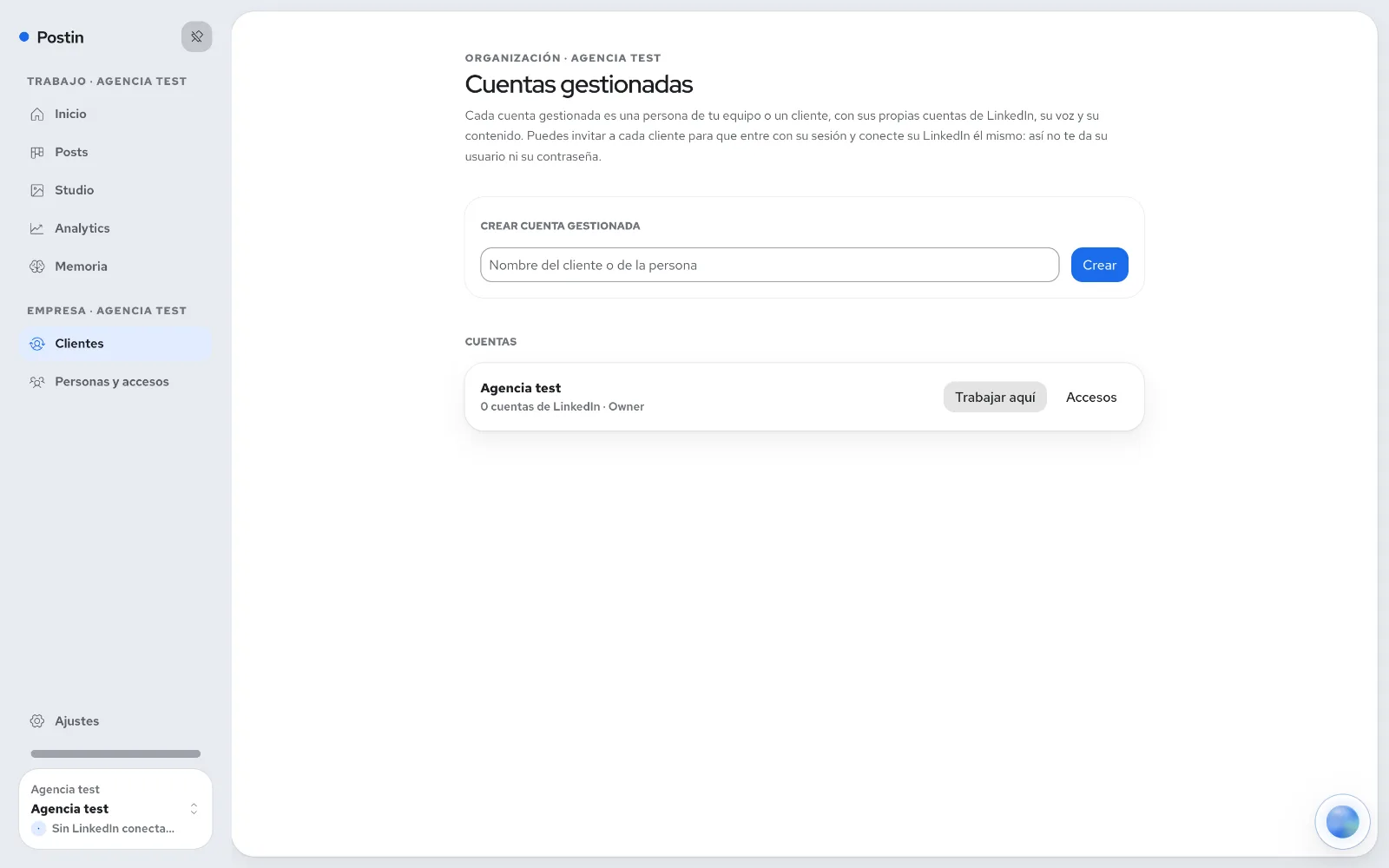
Multi-account
One account for the company. One organization per person.
Marketing sees everything and prepares everything. Each person keeps what's theirs: their connection, their voice, their Memory and their approval history.
- Their LinkedIn, connected by them
- Their voice: how they talk, not how they write
- Three people, three profiles
- Each with their own voice and calendar
- Posts when there's something to tell
- Their Memory knows what they've already shared
One voice doesn't step on another
Your head of product doesn't end up writing like the sales team.
Marketing doesn't impersonate anyone
It can prepare and schedule. It can't approve: that belongs to whoever posts under their own name.
If someone leaves
They remove their connection and leave the account. Their profile is no longer managed.
Before and after
Marketing gets it ready. Your people add the final period.
These are your own people's profiles: leadership, sales, product. Their part of the work is a single step.
- 1
The idea
Today
The content meeting ends with a list of topics nobody acts on.
With Postin
Postin
Suggests what to post. You tell it the idea or paste in the text, and it does the research.
- 2
The draft
Today
You ask for one post a month. Five months in, nothing, and it's not bad faith.
With Postin
Postin
Writes it with that person's Voice Profile, not the company's.
- 3
The review
Today
You hand it over already written and they publish it without changing a comma.
With Postin
Marketing
Adjusts the draft and fits it into the team's calendar.
- 4
The final period
Today
“I'll look at it this afternoon,” and it never happens. Or it goes out without anyone approving it.
With Postin
The person posting
Reads it, changes whatever they want and approves it. Minutes, not an afternoon.
If the text changes, it comes back here. Marketing can't skip this step.
- 5
Publishing
Today
Their network reads, under their name, a press release someone else wrote.
With Postin
Postin
It goes out on their profile and in their voice. There's a record of who approved which version.
A version gets approved, not the post
A specific version gets approved. If it's edited afterward, it needs approval again. That's what heads off the “I never approved that” conversation.
Roles for working, not for deciding
You invite your team with the access each person needs: write, edit, schedule. The final period can't be delegated.
Control
What your legal team is going to ask.
Official connection, no passwords
Each person authorizes their own account through LinkedIn's official API, from their own session. The company never handles anyone's credentials.
Approval per version, with a trail
There's a record of who approved which text. If the post changes afterward, the approval expires and has to be given again.
Roles and permissions
You invite whoever needs to be there, with the access they should have. When someone leaves the company, they leave the account.
Nothing automated behind the scenes
No simulated sessions and no bots posting. Only what LinkedIn officially allows.
The account type is chosen when you sign up and can't be changed: if you're going to manage your team's profiles, create it as a company account from the start.
What it costs
You pay per voice. Posting isn't counted.
The same scale as for agencies: the price goes down as you add people, and nobody has a post quota.
Voices
3
Per month
€317
€106 per voice
You sign up on your own and add more whenever you like. Each person gets their own Voice Profile.
When you create the account, choose “Company or agency.” The account type can't be changed later.
Questions
What marketing teams ask.
Can we post on the company page?
Not today: LinkedIn doesn't grant that permission in its API, and it's not up to us. Postin works on people's profiles, which is also where the reach is.
What if someone leaves the company?
They remove their connection and their profile is no longer managed. You lower the number of voices at the end of the billing cycle.
Can marketing post for them?
It can prepare everything, but it can't approve for them. The final period belongs to the person whose name is on the post.
Can we start with two people?
With one. The sensible way to start is with someone who's convinced, not with ten who were told to.
Start with one voice.
If it works with one person, the rest will follow on their own. If it doesn't, you won't have moved the whole company for nothing.